Free PDF Reynard the Fox: A New Translation
The book Reynard The Fox: A New Translation will constantly make you good value if you do it well. Finishing the book Reynard The Fox: A New Translation to check out will certainly not end up being the only goal. The goal is by obtaining the positive worth from the book up until completion of the book. This is why; you need to find out more while reading this Reynard The Fox: A New Translation This is not just exactly how quick you read a publication and not only has how many you finished the books; it is about what you have gotten from the books.
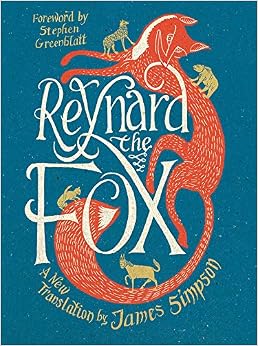
Reynard the Fox: A New Translation

Free PDF Reynard the Fox: A New Translation
Do you feel much better after finishing a publication to check out? What's your sensation when getting a brand-new book once more? Are you tested to review and complete t? Great viewers! This is the moment to conquer your goo behavior of analysis. We reveal a better publication once again to appreciate. Visiting this site will be also full of desire to read? It will not make you feel bored because we have numerous types as well as kinds of the books.
When you have actually had this publication, it's extremely cute. When you desire this publication and also still plan, don't bother, we provide below especially for you. So, you will certainly not run out of Reynard The Fox: A New Translation when in the shop. Guide that is presented is really the soft data. As the on-line collection, we reveal you many kinds as well as collections of publications, in soft documents forms. Yet, it can be obtained carefully and quickly by visiting the link offered in every web page of this internet site.
But, exactly how is the means to obtain this publication Reynard The Fox: A New Translation Still perplexed? It matters not. You can appreciate reading this book Reynard The Fox: A New Translation by on-line or soft documents. Merely download guide Reynard The Fox: A New Translation in the web link provided to see. You will certainly obtain this Reynard The Fox: A New Translation by online. After downloading, you could conserve the soft file in your computer or kitchen appliance. So, it will relieve you to review this e-book Reynard The Fox: A New Translation in particular time or area. It might be unsure to enjoy reading this e-book Reynard The Fox: A New Translation, because you have whole lots of job. However, with this soft file, you can delight in checking out in the extra time also in the spaces of your works in workplace.
One more time, what sort of individual are you? If you are actually among the people with open minded, you will have this book as your referral. Not just owning this soft file of Reynard The Fox: A New Translation, however obviously, check out as well as understands it becomes the must. It is exactly what makes you go forward much better. Yeah, go forward is needed in this situation, if you want truly a better life, you can So, if you really intend to be far better person, read this book and be open minded.
Review
“When I read Reynard the Fox for the first time…I instantly knew that Reynard could be enjoyed by everyone over a certain age: the literary pleasures of this work are instantly accessible to all lovers of great narrative…We are all political animals who need to survive, whatever we do. And all of us like laughing. And all of us are fascinated by animals, not least because we are ourselves animals who need to pretend otherwise.†- James Simpson, from the introduction“[Reynard the Fox] is clearly a satire, one that exposes the greed, corruption, and lying that poison institutions and social relations, above all at court…It helps, of course, that this is an animal fable, so what might otherwise seem like pages taken from King Lear or Othello come across as episodes from a "Road Runner" cartoon or an episode of The Itchy & Scratchy Show. Still more, the literary artistry of Reynard the Fox―its pace, its deft twists of plot, its zany characters, and its savage humor―persuades us that to survive in this world it is more important to pretend to be good than actually to be good. To this extent at least, Reynard is the secret twin of his great contemporary Niccolo Machiavelli.†- Stephen Greenblatt from the foreword“Reynard…is one of the defining documents of a vast tradition in Western art, indeed, in Western consciousness: the trickster tale…. [James] Simpson says that his version is the first readily accessible English translation to appear in almost a hundred years. I am glad that he rescued it.†- Joan Acocella, The New Yorker
Read more
About the Author
James Simpson is the Donald P. and Katherine B. Loker Professor of English at Harvard University. He lives in Cambridge, Massachusetts.Stephen Greenblatt (Ph.D. Yale) is Cogan University Professor of the Humanities at Harvard University. Also General Editor of The Norton Anthology of English Literature, he is the author of eleven books, including Tyrant, The Rise and Fall of Adam and Eve: The Story that Created Us,The Swerve: How the World Became Modern (winner of the 2011 National Book Award and the 2012 Pulitzer Prize); Shakespeare's Freedom; Will in the World: How Shakespeare Became Shakespeare; Hamlet in Purgatory; Marvelous Possessions: The Wonder of the New World; Learning to Curse: Essays in Early Modern Culture; and Renaissance Self-Fashioning: From More to Shakespeare. He has edited seven collections of criticism, including Cultural Mobility: A Manifesto, and is a founding coeditor of the journal Representations. His honors include the MLA’s James Russell Lowell Prize, for both Shakespearean Negotiations: The Circulation of Social Energy in Renaissance England and The Swerve, the Sapegno Prize, the Distinguished Humanist Award from the Mellon Foundation, the Wilbur Cross Medal from the Yale University Graduate School, the William Shakespeare Award for Classical Theatre, the Erasmus Institute Prize, two Guggenheim Fellowships, and the Distinguished Teaching Award from the University of California, Berkeley. He was president of the Modern Language Association of America and is a fellow of the American Academy of Arts and Sciences, the American Philosophical Society, and the American Academy of Arts and Letters.
Read more
Product details
Hardcover: 256 pages
Publisher: Liveright; 1 edition (March 9, 2015)
Language: English
ISBN-10: 0871407361
ISBN-13: 978-0871407368
Product Dimensions:
6.5 x 0.9 x 8.6 inches
Shipping Weight: 1 pounds (View shipping rates and policies)
Average Customer Review:
4.0 out of 5 stars
7 customer reviews
Amazon Best Sellers Rank:
#651,794 in Books (See Top 100 in Books)
I was absolutely surprised to find out what a page-turner REYNARD THE FOX is.Here we have mythical animal characters playing out their struggles in a kind of antique vernacular, but involving obviously human issues: power, rebellion, trust, betrayal, gullibility, and of course slyness and scheming. It is like one long Aesop's fable, but with plot twists and turns that make it hard to put down.The author has done a tremendous job in bringing this ancient text to modern readers. Through all the characters, you have the sense of how people lived and thought at the time, and can see that the original was in many ways a great satire of its time.Reynard is wonderfully portrayed as the amoral survivor and, from the way he talks to his few loyal friends and nephews, we get to see how he thinks, how his moral universe works, which mostly boils down to this: fools are to be taken advantage of. Reynard also knows that he is as much the hypocrite as anyone else, and says so, also saying that his only hope is redemption somewhere in the afterlife. This is what I mean by satire -- everyone in the tale explains what they do through piety, in the end.Some caution that the story is occasionally too gory for children, but I would disagree. I don't see this as anything the average 12 year old cannot handle, and the lessons of how much of the world still works today are too valuable to keep from them, if you ask me.One reviewer seems to have gone on a purely academic rant, claiming the translation is some kind of travesty. Well, a translation is a translation -- and is ultimately also an interpretation. Simpson's instinct for interpretation for our times is top-notch. Those who think they have a better one should publish it, and leave the bitter criticism for their small circle who already agree with them. I suspect Simpson has achieved something that they could not.Thank you, Mr. Simpson, for reviving the source of so much legend about this enormously influential character throughout all our folklore. It is a great pleasure to see the origins of timeless stories, and to know that our ancestors understood the world in ways we might have lost.
A tale for our time.
Tricky trickster
Excellent historical research here. The man knows his business. Anything about crafty old Reynard is first-rate here.
A very fun and colorful use of stories and verbal treachery from the 13th century ! Pre dates Machiavelli ! 😈
I own a small anthology of medieval literature which has a small poetic translation of a French poem about Reynard the Fox and it is hilarious. Honestly, the translation is not great shakes, but it does communicate the Wile E. Coyote crazy humor which I assume made the original so popular across Europe.James Simpson has translated a middle English prose version of Reynard the Fox and while he claims he aimed to please the reader, this translation has all pitfalls of awful academic translation. Simpson has not even mastered elementary English composition. Again and again he writes run on sentences full of "thens" then he goes back edits the "thens" out! His prose falls completely flat in a deadened chamber of too much explanation. I will quote a short passage--chosen completely at random--to illustrate the aggravation of reading this incompetent prose. This is Reynard talking:"I've also tricked Isengrim the Wolf more times than I can count. I called him 'uncle', for example, but that was only to deceive him, for he's no kin to me. I made him a monk at Elmare, where I myself also became one. That trick ended up hurting him and profiting me, for I had the bell rope tied to his feet. He so much enjoyed the ringing of the bell that he wished to learn how to do it, for which he ended up having a good deal of grief. He rang so loudly that the folk in the street were afraid of the noise and were puzzled as to what might be in the bell. They arrived before he had a chance to be made a monk and so he was beaten almost to death."I am almost at a loss to begin to explicate the dismality of this passage! The entire passage (as is the entire book) is written in a childish Dr. Suess prose, utterly devoid of any irony or comic effect.. The passage contradicts itself moronically (did you notice the wolf was "made a monk" at the beginning of the paragraph only not the have the "chance to be made a monk" at the end?) Simpson does not even know how to write simple English prose. He writes the wolf "enjoyed the ringing of the bells" which implies the wolf liked to actually pull the ropes to ring the bells. Yet the next clause mentions that the wolf wanted to "learn how to do it" which means Simpson meant to write the wolf "enjoyed hearing the bells ring." (Or to channel my inner English professor, the wolf "enjoyed listening to the ringing of the bells.") And you call the towns people "the folk in the street"??? Can we find a clumsier phrase? The simple prose robs the passage of whatever dynamic feeling it might have and so the reader doesn't imagine a wolf going mad at bell ringing, maybe panicking the townsfolk into thinking an invading army was imminent, and turning into a wolf beating mob--no--you just have a stuffed teddy wolf being beaten senselessly by some faceless "folk in the street."Thanks to the incredibly bad translation, the entire Medieval Age is libeled! Truly, this book was a runaway bestseller on Amazon's list about 1324, and from this translation a reader is left thinking the entire age reveled in strange mean cruelty. This cannot be true, as it is not reflected in anything else I have read from the age, including the poetic excerpt I read of Reynard and it is only Simpson's drecky prose which maligns an entire civilization! IF a epoch could sue in court, Mr. Simpson would be in the dock and found guilty guilty guilty!To make the entire book worse, Simpson occasionally puts on his professorial cap and writes footnotes. One example will suffice. Simpson footnotes a passage "the priest's wife Julocke came with her distaff--she'd been spinning" (and by the by what exactly was Julocke doing with a distaff if she was not spinning? Were good vibrators so rare in the middle ages you used whatever came to hand?) with the moronic note "In Catholic Europe, of course, priests were forbidden to marry. The picture of parish life given here falls far short of the doctrinal ideal." This note has two problems: 1) It is obvious and 2) it completely passes over the complexity of medieval Europe, where the clergy were often not well educated and the celibate priesthood is still a bit of a novelty. (It was only introduced, against a good deal of resistance (duh!) around 1000.)On the bright side, this is a very pretty book with some very nice drawings. I like holding it. The paper is very good.I imagine the editor published this book because she figured Simpson, one of the editors of the infamous Norton Anthology of literature--the one with the microscopic type and tissue thin paper--would be able to insure sales to classes of bored English majors. This book is a travesty.
First published in the 15th century, this book is a parable illustrating animal characters whom portray human traits to convey a philosophical message. It is an animal fable that not only resonated in medieval times, but albeit in today's age of the 21st century, humanity still suffers from age-old human character flaws. The main antagonist of the story is a fox who is cunning, clever and deceitful to the degree of manipulating his "victims," through trickery. He is assisted by a wolf and a lion. All conspire against the protagonists of a dog, cat, hare, badger, cock, bear, rabbit, crow and a ram. The fox blinds the listeners so that his lies are taken for truth. The gradual acceptance of the fox's deception, allows covetousness, falsehood, hatred, envy to extinguish virtues of hope, justice and honestly. This is a beautifully rendered translation and should be read by both adults and children alike. The metaphors are brilliant.
Reynard the Fox: A New Translation PDF
Reynard the Fox: A New Translation EPub
Reynard the Fox: A New Translation Doc
Reynard the Fox: A New Translation iBooks
Reynard the Fox: A New Translation rtf
Reynard the Fox: A New Translation Mobipocket
Reynard the Fox: A New Translation Kindle
COMMENTS