Free Ebook The Man Who Wasn't There: Investigations into the Strange New Science of the Self, by Anil Ananthaswamy
Earn currently the book entitled The Man Who Wasn't There: Investigations Into The Strange New Science Of The Self, By Anil Ananthaswamy to be your resources when mosting likely to read. It can be your new collection to not only show in your shelfs but additionally be the one that could help you penalizeding the very best sources. As in common, book is the window to obtain in the world and also you could open the world conveniently. These sensible words are truly familiar with you, right?
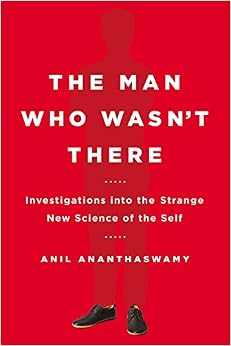
The Man Who Wasn't There: Investigations into the Strange New Science of the Self, by Anil Ananthaswamy

Free Ebook The Man Who Wasn't There: Investigations into the Strange New Science of the Self, by Anil Ananthaswamy
Why you should review each day when you have extra time? Have you discovered the specific factors of you to read? Several are aiming to have analysis habit for their better future, however actually, it can be fallen short. Just what's wrong? Is the analysis behavior a culture, actually habit, requirement, or something others? If you truly would like to know the number of individuals attempt to inspire themselves to have reading habit, you an additionally be inspired of it.
This publication features the unique preference of the book composed. The professional writer of this The Man Who Wasn't There: Investigations Into The Strange New Science Of The Self, By Anil Ananthaswamy has frequently makes a terrific book. But, that's not just about excellent publication. This is additionally the problem in which guide offers extremely fascinating materials to get rid of. When you truly intend to see exactly how this book is given and offered, you can sign up with much more with us. We will certainly offer you the link of this publication soft file.
Being popular for a publication will certainly make the name and also material of the book is likewise trusted. The Popularity of this publication is additionally balanced with the materials as well as everything informed and also clarified. When you require something relied on, The Man Who Wasn't There: Investigations Into The Strange New Science Of The Self, By Anil Ananthaswamy holds good way to pick. You may really feel that this book will be hard to review and understand. Why? Appeal is generally for the big publication that comes with hard creating designs.
Based upon this condition, to assist you we will show you some methods. You can handle to check out the book minimally prior to falling asleep or in your extra time. When you have the moment in the short time or in the trip, it could aid you to complete your vacations. This is just what the The Man Who Wasn't There: Investigations Into The Strange New Science Of The Self, By Anil Ananthaswamy will minimally offer to you.
Review
Praise for The Man Who Wasn't There“If you simply want to read a great science book, I can’t recommend any more highly than this one.”—Forbes"An agreeably written travelogue through this mysterious landscape at the frontiers of knowledge."—The Wall Street Journal “You’ll never see yourself—or others—the same way again.”—People“The gallery of personal, often tender, portraits of patients is impressive and reminiscent of the writings of Oliver Sacks… A skilled science journalist, Ananthaswamy excels at making theoretical concepts and experimental procedures both comprehensible and compelling.”—Science“In The Man Who Wasn’t There, science writer Anil Ananthaswamy smartly explores the nature of the self by way of several mental conditions that eat away at patients’ identities… Following in the steps of Oliver Sacks’s “The Man Who Mistook His Wife for a Hat” (1985) and V. S. Ramachandran and Sandra Blakeslee’s “Phantoms in the Brain” (1999), Ananthaswamy uses neuropsychology and narrative to take us inside the heads of people experiencing realities very different from our own.”—Washington Post“Anil Ananthaswamy’s exploration of the human ‘self’ is a blazingly original excursion through the brain—as well as a fascinating catalog of bizarre disorders.”—Entertainment Weekly"Autobiographies hinging on conditions such as Asperger's syndrome and schizophrenia are proliferating, but there is little to fill the void between such accounts and the scientific literature. Linking experiences with experiments, and individuals with numbers, Ananthaswamy bridges that gap convincingly."—Nature “When you think 'beach read," you probably don't think "neuroscience." But science journalist Ananthaswamy has a knack for making difficult topics accessible to everyone.” —Men’s Journal “It is an astonishing journey and an ambitious book, bringing together cutting-edge science and philosophy from West and East. You will not be quite the same self after reading it.”—New Scientist"An excellent if unnerving book: 'you' turn out to be more fluid than 'you' thought."—New Scientist, CultureLab“A thought-provoking read… Ananthaswamy relays many interesting advances and, at the same time, challenges us to contemplate who we really are.”—Scientific American Mind“[The Man Who Wasn’t There] illuminates some of the most provocative questions at the boundary of science and philosophy.”—Columbus Dispatch“Sophisticated science, sensitive storytelling and Nancy Drew-like curiosity are at the heart of science author and journalist Anil Ananthaswamy's The Man Who Wasn't There."—San Jose Mercury News“Science journalist Ananthaswamy skillfully inspects the bewildering connections among brain, body, mind, self, and society… Readers will be fascinated by Ananthaswamy's chronicles as he explores, with kindness and keen intelligence, the uncomfortable aberrations that reveal what it is to be human.”—Publishers Weekly (starred review)“A provocative examination of deep questions.”—Kirkus“If you like Oliver Sacks, you’ll love this new work by Ananthaswamy…..” —Library Journal“A faint-of-heart hypochondriac might wish to give Ananthaswamy’s book a wide berth, but others should find it quite fascinating. From the man who insisted that he was brain dead (despite walking, talking, eating, and taking the bus) to autism, Alzheimer’s, something called body integrity identity disorder (read the book), and more, Ananthaswamy demonstrates how what is perceived as the self can wiggle all over the map.” —Booklist“Despite the depth of scientific knowledge plumbed in the book, the language is simple and accessible in the tradition of the late, great neuroscientist Oliver Sacks (The Man Who Mistook His Wife for a Hat). The series of stories that illustrate the complexity of the brain and its creation of selfhood are imbued with emotion and compassion for the sufferers, even as their conditions are explained in scientific terms.”—India Currents “A compelling and entertaining look at the last untapped mystery, the true final frontier: the nature of our selves. Science journalism at its best.” —Daniel J. Levitin, author of The Organized Mind and This Is Your Brain on Music “Stunning… poetic and incisive. Each of the patients is unique, special and incredible in revealing something special about the mind, whether healthy or fragile. Ananthaswamy discovers the elusive nature of the very idea of self and makes sense out of it. It is a remarkable achievement.” —Michael Gazzaniga, author of Who’s in Charge? and Tales from Both Sides of the Brain “Ananthaswamy’s remarkable achievement is to make sense of these unhappy individuals’ otherness, while holding on to their human sameness. You’ll come away enlightened and chastened, asking searching questions about who you are.” —Nicholas Humphrey, Cambridge University, author of A History of the Mind “Like Oliver Sacks, Ananthaswamy brings both erudition and sensitivity to his narrative so that we learn as much, and maybe more, from his subjects as we do from the scientists we meet along the way…. You’ll emerge with renewed wonder about the simple experience of being you.” —Anil Seth, University of Sussex, Editor-in-Chief, Neuroscience of Consciousness “A wide range of engrossing (and many just plain weird) stories elegantly weaving together insights from psychology, psychiatry, and neuroscience. An informative, exciting, and slightly creepy tour of some profound questions about human nature.” —David Poeppel, Director, Max-Planck Institute and Professor of Psychology and Neural Science, NYU “In this lucid and personable analysis by Ananthaswamy, the self appears an illusion, which nevertheless feels very real to most of us. Since no organism can do without this mental anchor, nature has found a way to concoct one for us.” —Frans de Waal, author of The Bonobo and The Atheist“It is an astonishing journey and an ambitious book, bringing together cutting-edge science and philosophy from West and East. You will not be quite the same self after reading it.”—Alun Anderson, New ScientistPraise of Anil Ananthaswamy's The Edge of Physics:“A thrilling ride!” —Sean Carroll, author of The Particle at the End of the Universe“Displays a writer’s touch for fascinating detail.” —The Washington Post“A wonder-steeped page-turner.” —Seed
Read more
About the Author
ANIL ANANTHASWAMY is former deputy news editor and current consultant for New Scientist. He is a guest editor at UC Santa Cruz’s renowned science-writing program and teaches an annual science journalism workshop at the National Centre for Biological Sciences in Bangalore, India. He is a freelance feature editor for the Proceedings of the National Academy of Science’s “Front Matter” and has written for National Geographic News, Discover, and Matter. He has been a columnist for PBS NOVA’s The Nature of Reality blog. He won the UK Institute of Physics’ Physics Journalism award and the British Association of Science Writers’ award for Best Investigative Journalism. His first book, The Edge of Physics, was voted book of the year in 2010 by Physics World. He lives in Bangalore, India, and Berkeley, California.
Read more
See all Editorial Reviews
Product details
Hardcover: 320 pages
Publisher: Dutton; 1st edition (August 4, 2015)
Language: English
ISBN-10: 0525954198
ISBN-13: 978-0525954194
Product Dimensions:
6.2 x 1.1 x 9.2 inches
Shipping Weight: 1.6 pounds (View shipping rates and policies)
Average Customer Review:
4.1 out of 5 stars
65 customer reviews
Amazon Best Sellers Rank:
#522,886 in Books (See Top 100 in Books)
Much of this book reads better than science fiction. As an example: real people who want limbs of their healthy bodies amputated, and when they do, they feel much better afterwards.The brain is doing a lot of amazing stuff that turns bizarre when something in the brain goes amiss.I highly recommend it to a general audience. It's fascinating, accessible and informative. Professionals in neuroscience may want something more organized and rigorous. The style is journalistic not textbook format.I have to reread this book. There's many ideas here to be digested.Perhaps if there is any difficulty: (1) The sheer number of areas of the brain that are mentioned in the book. It's not neccessary to map them out, but that could be helpful. (2) Keeping in mind when something discussed is a theory vs. when it is an established fact about the brain.Though I don't fault the author - he's trying to keep his feet within the realm of science - the one major criticism that I have of this book - is that the book only deals with the 'self as object' i.e. aspects of yourself that are readily observable e.g. 'I am happy'. The author admits quite early that the more elusive self as the 'subject' of experience is only alluded to here. The self as the subject of experience is discussed much more in philosophy, where there is a much higher tolerance for speculation.
In this book, Anil Anathaswamy sets out to argue that the self is not an illusion. But it also isn't a "thing" either. The self is the feeling we get when a variety of brain parts do their job correctly or well. His study examines the self and the feeling of it by looking at cases where some of those brain parts don't work as they should.We start off with Cotard's syndrome, or, patients who are very much alive but believe themselves to be dead. (Imagine how strange it must be to have someone talk about how they think they are dead as if this weren't a contradiction.) This is a syndrome where the part of our brains that identify our actions and our bodies as OURS somehow isn't sending that signal.Then there is Body Identity Integrity Disorder, where a person's body doesn't match with what they believe is really their body - maybe one of their legs feels like it shouldn't be there. These are the folks who quite deliberately seek out amputation, not because they WANT to look different, but because a part of their body feels like it is not really a part of their body. (This happens when the part of our brain responsible for mapping a mental image of our body doesn't align with how our body actually is.)As a former special educator, I am quite educated on autism and schizophrenia, but Ananthaswamy talks of them in a bit of a different way - for instance, how some theorize that schizophrenia is basically what happens when the part of our brain that identifies mental thoughts or voices as ours (rehearsing my thoughts in my head) doesn't identify certain voices in my brain as coming from my brain. So they feel foreign. And mabe i feel like my thoughts are controlling me.Anyway, that is a taste of how this book goes. In the style of Oliver Sachs, Ananthaswamy does a great job teling the stories of diverse others in a way that makes them quite relatable. But what was most fascinating about this book to me was watching folks create narratives to try and make sense of what their brains are telling them. If my brain is telling me that my body is not my body, then how do I make sense of that? Oh, well, I must be dead. I am hearing voices that seem to be in my brain, but I'm not intuiting that they are coming from me. Oh, there must be someone or something who has taken over part of my brain. Etc.So, the author argues that the self is not an illusion, or at least not the kind of illusion that we can step out of to see if it is an illusion (making it unlike every other illusion we know of). But the story that emerges here is that the self is not really a thing, or one function of our brains. It is many functions of our brains coming together to give us this feeling. Whether that counts to someone like Daniel Dennett as an illusion is another discussion. But the self is a feeling that we cannot step away from, even when the brain parts giving rise to it don't always work right.
This book describes research done on people with injuries, diseases, or abnormalities of the brain that has helped to pinpoint brain regions involved in the concept of the self. These ailments (or, in some cases, simply differences from the “neurotypicalâ€) include Alzheimer’s disease, autism spectrum disorders, schizophrenia, and delusions such as the belief that some part of one’s body, usually an arm or leg, is a foreign thing that should be removed. Electrophysiological and imaging studies such as functional magnetic resonance imaging (fMRI), which indirectly reveals activity in particular brain areas by measuring changes in blood flow, have linked particular disorders to increased or decreased function in certain parts of the brain.Ananthaswamy explains that scientists’ interest in the self is rooted in philosophers’ examination of the same issue, which goes back to ancient times and continues today, and shows how the viewpoints of philosophy and science can illuminate one another. He discusses different definitions of the self, including the narrative self (the self as a collection of stories), the self as subject, and the self as object, and offers evidence for the existence—or lack of existence—of each in the brain. Not surprisingly, he concludes that, although evidence links certain brain regions with different aspects of our self-concept, thinkers have by no means settled the question of what the self really is, or whether it can be said to exist at all. Perhaps the closest one can come is to say that it is not a separate entity with a physical location, but rather the sum of the brain’s activities and interactions with the body (which plays an essential role in the development and maintenance of self-concept) over time—a property that emerges from the whole system. As philosopher Daniel Dennett puts it, it is a “fiction, posited in order to unify and make sense of an otherwise bafflingly complex collection of actions, utterances, fidgets, complaints, promises, and so forth, that make up a person.â€Ananthaswamy’s use of case histories of people with brain ailments to reveal the workings of the normal brain recalls the books of Oliver Sacks, and anyone who enjoyed those books is likely to enjoy this one as well. These stories keep the book from being dry or technical, and the author does an excellent job of blending them with the results of the neuroscience studies, which were often performed on the same people. This book should be fascinating to anyone who has meditated on that most basic of human questions: “Who am I?â€
The Man Who Wasn't There: Investigations into the Strange New Science of the Self, by Anil Ananthaswamy PDF
The Man Who Wasn't There: Investigations into the Strange New Science of the Self, by Anil Ananthaswamy EPub
The Man Who Wasn't There: Investigations into the Strange New Science of the Self, by Anil Ananthaswamy Doc
The Man Who Wasn't There: Investigations into the Strange New Science of the Self, by Anil Ananthaswamy iBooks
The Man Who Wasn't There: Investigations into the Strange New Science of the Self, by Anil Ananthaswamy rtf
The Man Who Wasn't There: Investigations into the Strange New Science of the Self, by Anil Ananthaswamy Mobipocket
The Man Who Wasn't There: Investigations into the Strange New Science of the Self, by Anil Ananthaswamy Kindle
COMMENTS